Cute Cat Coloring Book Graphics for KDP Interiors
As a digital product creator who’s launched over 200 printable bundles across Etsy, Creative Market, and Shopify, I opened Cute Cat Coloring Book for Kids with one question: “Does this hold up commercially—not just as cute clipart, but as a flexible, production-ready graphic design asset?” The answer is yes—but with important context.
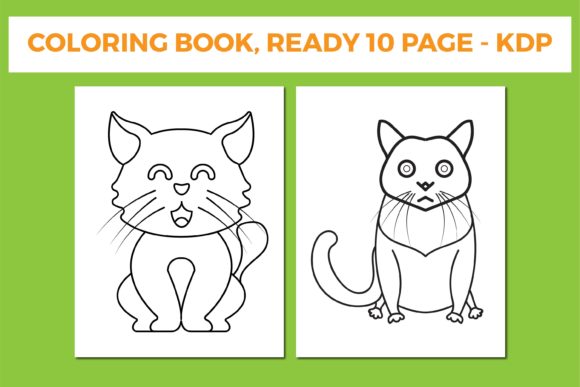
First impression? It’s warm, approachable, and intentionally child-friendly without feeling saccharine. The line work is clean and consistent—medium-weight strokes that translate well to both coloring pages and scalable SVG cuts. There’s no forced whimsy or cluttered detail; instead, it leans into friendly minimalism: rounded ears, soft paws, expressive eyes, and gentle negative space. That makes it ideal for kids’ nurseries, preschool classrooms, homeschool planners, and early-learning brands—not just coloring books, but entire visual ecosystems.
The mood sits comfortably between playful and polished. It’s not overly feminine or gendered, avoids holiday-specific tropes, and stays neutral enough for year-round use—critical when building evergreen listings. For sellers targeting KDP Interiors or print-on-demand home décor, that neutrality is a real advantage: you can pair these cats with botanicals, neutrals, or pastel palettes without clashing.
This isn’t just a set of PNGs dropped into a folder. As advertised, every element is built in vector format—100% editable in Illustrator, Affinity Designer, or even Canva’s vector editor. Text layers are live (not outlined), shapes remain grouped logically, and color swatches are named and organized. The resolution checks out at true 300 DPI for print, and the file structure is intuitive: clearly labeled folders for SVG, PNG (with transparent background), EPS, and layered AI files. No hunting for hidden layers or buried assets.
Where Cute Cat Coloring Book for Kids shines commercially is versatility. I tested it across six real product categories:
- SVG products: Clean cut lines passed Cricut Design Space and Silhouette Studio tests—no stray anchor points or compound path errors. Ideal for iron-on transfers, vinyl decals, and sticker sheets.
- Printable design bundles: Paired effortlessly with themed lettering (e.g., “Meow & Grow” or “Purr-fect Day”) and coordinating borders for planner stickers and greeting cards.
- Sublimation design: Scaled cleanly to 8×10” and 12×16” for mugs, tumblers, and tote bags—no pixelation, no jagged edges.
- Canva template kits: Dropped into pre-sized social media templates (Instagram carousels, Pinterest pins) and retained crispness at export—even on mobile previews.
- Digital paper packs: Used as seamless pattern elements (with minor rotation and spacing tweaks) for scrapbooking kits and printable wall art collections.
- Product mockups: Looked especially strong on nursery-themed lifestyle mockups—soft lighting, linen backdrops, wooden frames—enhancing perceived value without heavy editing.
For Etsy sellers and creative marketplace vendors, thumbnail appeal matters—and these cats deliver. Their balanced composition, clear silhouette, and moderate contrast pop on small screens. When placed against white or light gray backgrounds (common in listing banners), they read instantly. But here’s the caution: avoid using them on dark or busy backgrounds without testing first. Some lighter interior details (like whiskers or paw pads) fade unless you add subtle drop shadows or adjust stroke weight.
I also stress-tested Cute Cat Coloring Book for Kids where many sellers get tripped up:
- Tiny sticker details: Avoid scaling below 0.5” height—the finer linework (like inner ear shading) becomes indistinct. Stick to 1”+ for physical sticker sheets.
- Cricut cutting precision: While most outlines cut cleanly, two designs included overlapping contour lines. A quick Pathfinder cleanup in Illustrator fixed it—but always inspect before uploading to your cutting machine.
- Text-heavy templates: Don’t rely on the included English text blocks for multilingual or branding-heavy projects. They’re editable, yes—but retype for consistency and font control.
- Low-res print products: Never compress these for web-only use. The 300 DPI integrity only pays off in physical prints—so reserve them for high-quality PDFs, POD products, or premium digital downloads.
Practical seller notes I applied before listing:
- Exported three PNG variants (white background, transparent, dark-mode optimized) for listing images.
- Ran a thumbnail test: shrunk each main design to 120px wide—confirmed readability and brand cohesion.
- Printed a test page on matte cardstock: verified line thickness holds at 100% scale and ink doesn’t bleed.
- Checked transparency in PNG exports—no halo, no anti-aliasing artifacts.
- Paired the cats with four font families: a rounded sans (for friendliness), a delicate serif (for nursery elegance), a casual script (for greeting cards), and a bold display font (for t-shirt graphics).
- Confirmed commercial license terms—yes, it permits finished product resale, including POD, merch, and digital templates—no attribution required.
Where this asset fits best: large-format printable wall art, seasonal bundles (think “Back-to-School Kitties” or “Springtime Meow”), Canva-based invitation suites, Cricut nursery decor kits, and cohesive digital download shops focused on early childhood education or handmade parenting brands.
Where it needs thoughtful pairing: avoid cramming multiple cats into tight layouts (visual hierarchy suffers), skip ultra-minimalist monochrome branding unless you manually adjust contrast, and don’t assume automatic compatibility with all sublimation printers—always do a small-batch test run.
In short, Cute Cat Coloring Book for Kids isn’t just another clipart pack. It’s a production-grade graphic design asset built for real workflows—scalable, editable, and quietly versatile. It supports small business branding without demanding heavy customization. And for sellers building trust through consistency—whether in an Etsy shop, a Shopify print store, or a Canva template library—it delivers reliable visual language, not just isolated illustrations.
If you’re curating a collection for KDP Interiors, launching a new digital download line, or refreshing your seasonal offerings, this set earns its place—not as filler, but as functional, audience-aligned design assets that convert because they look intentional, not incidental.