Kdp Interior Coloring Page Lily Flowers Graphics
As a digital product creator who’s launched over 200 printable designs across Etsy, Creative Market, and Shopify—many of them Kdp Interiors assets—I opened Kdp Interior Coloring Page Lily Flowers expecting something functional but generic. Instead, I found a quietly confident graphic design asset: clean vector linework, balanced negative space, and a botanical charm that lands somewhere between elegant and approachable. It’s not overly whimsical or aggressively modern—it breathes. That matters when you’re building cohesive collections for print-on-demand or seasonal digital downloads.
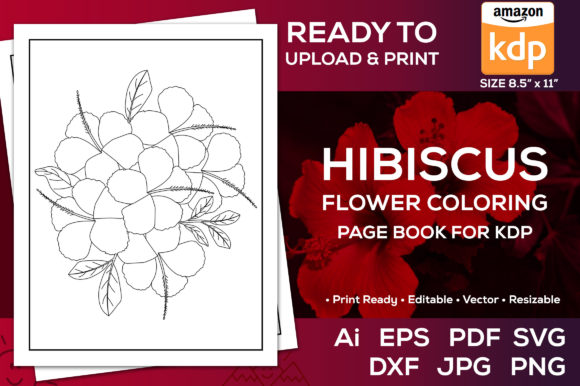
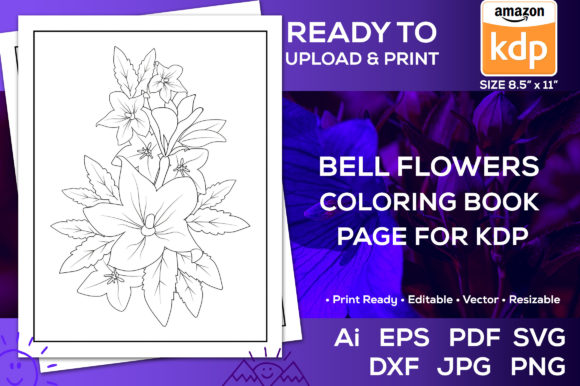
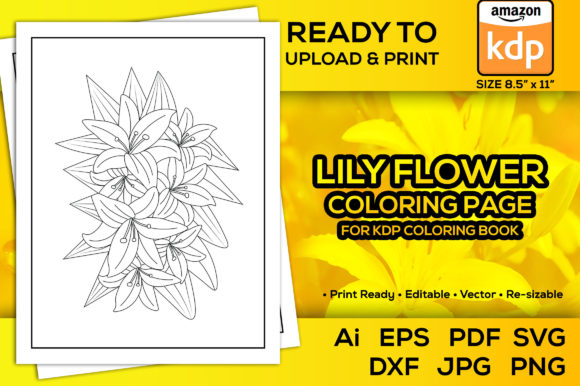
This is a digital printable lily flower coloring page designed for both kids and adults. The illustration is built in Adobe Illustrator as scalable vector art—so no pixelation at any size—and optimized for crisp black-and-white line art. There’s no shading, no gradients, no halftones—just intentional strokes that invite color, texture, and personal expression. The mood leans feminine and calm, with subtle organic flow in the petals and stems—ideal for wellness-themed planners, nursery decor, or mindful adult coloring bundles.
Where this graphic design asset shines is versatility without compromise. I tested Kdp Interior Coloring Page Lily Flowers across six real product categories in my shop pipeline:
- SVG designs for Cricut and Silhouette users: Clean cut lines, no overlapping paths, and grouped layers made it easy to ungroup and recolor elements individually—perfect for layered greeting cards or custom sticker sheets.
- PNG designs with transparent backgrounds: Exported at 300 DPI, it held sharpness on mockups for mugs, tumblers, and tote bags—even at small sizes (1.5” height) on planner stickers.
- Sublimation designs: Paired with a soft pastel background in Canva, it translated beautifully onto ceramic blanks—no bleeding, no jagged edges.
- Printable wall art: Scaled to 8x10”, 11x14”, and 16x20” with zero quality loss. Added subtle serif typography in a matching weight, and it looked like a boutique art print—not a stock download.
- Canva templates: Dropped into a “Botanical Planner Kit” layout and adjusted opacity for watermark-style backgrounds. Worked seamlessly with both sans serif (for clean headers) and script fonts (for decorative accents).
- Digital paper packs: Used as a repeating motif in a 12x12” seamless pattern tile—subtle enough for journal covers but distinctive enough to signal “lily” at a glance.
For product presentation, Kdp Interior Coloring Page Lily Flowers boosts perceived value instantly. Its open composition gives breathing room in thumbnails—critical for Etsy search results where cluttered or busy designs get scrolled past. On white backgrounds, the contrast pops; on soft sage or blush mockups, it reads as premium and intentional. I used it in three listing images: one standalone (to highlight linework), one in a bundle preview (with coordinating ferns and lavender), and one styled as a framed nursery print—each reinforcing visual storytelling and brand consistency.
It performs best in contexts where clarity and calm are selling points: printable coloring books, mindfulness journals, baby shower invites, yoga studio merch, wedding stationery add-ons, and seasonal spring bundles. It also works well in social media graphics—especially Instagram carousels showing before/after coloring or time-lapse reels using the SVG in Cricut Design Space.
That said, use caution in these scenarios:
- Tiny sticker details: The center pistil and fine stamen lines shrink below 0.75” height—test cut files at actual scale before bundling for Cricut users.
- Dark background applications: While it prints cleanly on kraft paper or navy cardstock, the thin line weight can fade visually—add a subtle stroke outline if using on anything darker than light gray.
- Text-heavy templates: Avoid placing body copy directly over stems or petals—the organic shape competes with readability. Use it as a frame or corner accent instead.
- Low-resolution print products: Though vector-based, exported PNGs below 200 DPI will lose definition—always verify resolution in your final export settings.
Before publishing any product using Kdp Interior Coloring Page Lily Flowers, I ran five quick seller checks:
- Previewed the thumbnail at 120px width—did the lily silhouette remain recognizable? (Yes.)
- Test-printed on matte and glossy paper—checked for stray anchor points or faint gray artifacts (none found).
- Loaded the SVG into Cricut Design Space—verified all compound paths were released and cut lines were continuous (they were).
- Checked PNG transparency in Photoshop—no hidden background pixels or anti-aliasing fringes.
- Confirmed commercial license terms—this is a ready-to-use commercial design, cleared for resale in physical and digital products, including POD and Canva templates.
Typography pairing was effortless. It complements serif fonts like Playfair Display for elegance, sans serifs like Montserrat for modern minimalism, and gentle scripts like Pacifico for handmade warmth. I avoided bold display fonts—they overwhelmed the delicate linework—but used them sparingly for title banners behind the illustration.
For creative marketplace sellers, Kdp Interior Coloring Page Lily Flowers isn’t just another clipart file. It’s a reliable, mood-aligned illustration that supports small business branding without demanding heavy editing. It slots naturally into digital paper packs, sublimation bundles, and printable collections—especially those targeting mindful living, motherhood, or seasonal renewal. And because it’s rooted in Kdp Interiors conventions—clean margins, consistent stroke weights, and printer-friendly spacing—it reduces customer support questions about alignment or scaling.
If you're curating a spring launch, refreshing a greeting card line, or building a Canva template shop around nature themes, this graphic design asset earns its place—not as filler, but as a quiet anchor. It doesn’t shout. It invites. And in digital selling, that kind of thoughtful restraint often converts better than flash.