Counting and Coloring Number for Kids Graphics
As a brand designer who’s built visual identities for over 40 local businesses—from handmade soap studios in Asheville to seasonal candle boutiques in Portland—I recently evaluated Counting and Coloring Number for Kids not as a children’s activity book, but as a graphic design asset with real-world branding potential. My test case? Refreshing the packaging and in-store visuals for “Maple & Marigold,” a family-run children’s boutique that sells organic cotton onesies, wooden learning toys, and locally printed story cards.
A Playful, Warm, Handmade Vibe—Not Just “Cute”
First impression: this isn’t bubblegum-bright clipart. The numbers carry gentle hand-drawn weight—soft edges, subtle texture, and intentional imperfection. Think watercolor washes beneath outlined numerals, or delicate line-art leaves curling around the curves of “5” and “8.” It reads as friendly, approachable, and intentionally handmade—not generic or mass-produced. That warmth translates directly to small business credibility: parents scanning shelves instantly read “thoughtfully made,” not “downloaded from a creative marketplace.” For brands rooted in care—like artisanal baby skincare lines, Montessori-aligned toy shops, or farm-to-table kids’ meal kits—this mood builds immediate emotional resonance.
Where It Earns Its Place in Real Local Business Design
This asset shines where personality meets practicality:
- Packaging design: Used as die-cut accents on kraft gift boxes for wooden number puzzles—scanned at 300 dpi, it holds crisp detail without pixelation.
- Product label: Scaled down to 1.25” height, the SVG version stays sharp on jar labels for counting-themed bath salts (“3 Lavender Drops, 5 Chamomile Petals”).
- Social media graphics: PNGs with transparent backgrounds layer cleanly over lifestyle photos—think Instagram carousels showing a toddler coloring “7” beside a real maple syrup bottle (for a local pancake syrup brand’s back-to-school promo).
- Printable design: Bundled PDFs formatted for 8.5”x11” print let boutiques create in-store activity sheets—branded with their logo and color palette—turning foot traffic into engagement.
- Seasonal campaign visuals: Paired with warm-toned photography, the “12” graphic became the hero element on holiday hang tags for handmade advent calendars sold at a Portland florist’s pop-up.
How It Strengthens Small Business Branding—Beyond Decoration
Used intentionally, Counting and Coloring Number for Kids does more than fill space—it supports core branding outcomes:
- Stronger first impression: On shelf or screen, its tactile quality signals craftsmanship before a customer reads a single word.
- Better product recognition: Consistent use across labels, thank-you cards, and social posts creates visual rhythm—shoppers begin associating those soft-number motifs with your brand’s values.
- Clearer visual hierarchy: When layered behind bold sans-serif product names (e.g., “Organic Teething Ring – Set of 6”), the illustration recedes just enough to guide the eye—not compete.
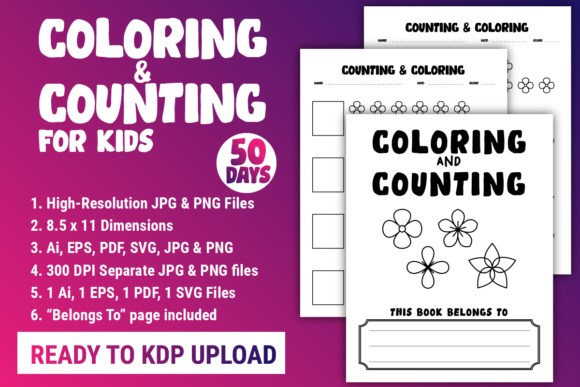
- More consistent brand identity: With AI, EPS, and SVG files included, you’re not stuck resizing JPEGs—you’re building scalable, editable elements for long-term brand identity systems.
- Improved customer trust: The inclusion of source files signals professionalism—critical when selling physical goods where packaging quality reflects perceived value.
Smart Use Cases vs. Strategic Caution Zones
Counting and Coloring Number for Kids works best where warmth and approachability are assets:
- Product mockups for Etsy or Shopify storefronts
- Decorative brand elements on reusable tote bags or tea towels
- Hero graphics for email headers and website banners
- Printable inserts inside subscription boxes (e.g., “Color Your Way Through Our Summer Collection”)
- Boutique visuals—window decals, receipt tape, or chalkboard menu accents
Use carefully in contexts where clarity or restraint is non-negotiable:
- Formal corporate branding (e.g., law firm kids’ literacy program collateral)
- Very small labels (<1” height) without testing SVG scalability first
- Crowded packaging layouts where illustration competes with ingredient lists or certifications
- Legal disclaimers or regulatory text zones—never overlay critical information
- Luxury minimalist brands (e.g., high-end ceramic baby bowls)—its charm can dilute refined simplicity
Practical Designer Notes Before You Implement
Before dropping this into your next small business branding project, run these checks:
- Test it on a real product mockup—print a 2” version on actual label stock; verify legibility under store lighting.
- Check black-and-white usage: some PNGs lose subtlety when converted—lean on the vector files for monochrome applications.
- Preview it beside your brand fonts: it pairs beautifully with rounded sans-serifs (like Quicksand) and gentle scripts—but can overwhelm tight serif settings like Merriweather.
- Confirm commercial licensing: while marketed for KDP interiors, verify rights cover physical product sales, packaging, and client work—especially for handmade business clients.
- Inspect SVG editability: open in Illustrator—can you easily recolor paths or isolate individual leaves? This matters for customizing across product lines.
- Compare against competitor packaging: does it stand out on shelf—or blend into expected “kids’ stuff” tropes?
Ultimately, Counting and Coloring Number for Kids isn’t just another digital product—it’s a versatile, emotionally intelligent design asset that, when matched thoughtfully to a local business’s voice, elevates everything from a $3 sticker to a full seasonal campaign. In an era where customers choose brands that feel human first, this kind of warmth—delivered through smart, scalable graphics—isn’t decorative. It’s strategic.